About the Archive
The Vanished Naturalist
an account of the archive and the one who kept it
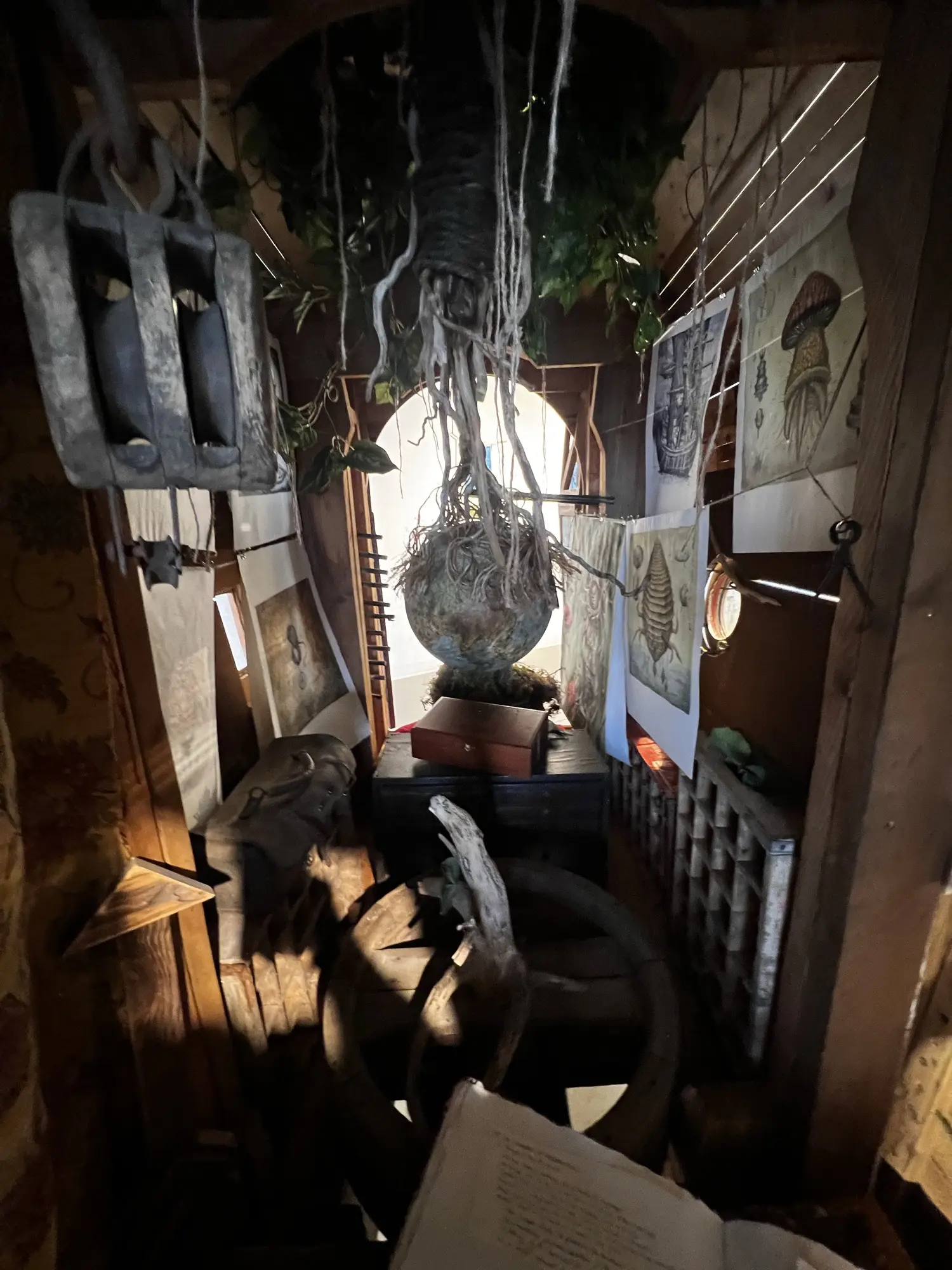
The wagon
The archive begins with a field wagon, built to the length of a body, tall enough to stand inside. It was found with its contents in place. Twelve watercolor studies pinned along the walls. A two-drawer catalog of field notes, some filed, some not. The working tools: graphite nubs worn to the wood, dirtied brushes, a water jar with pigment residue, pressed plants, calipers, a compass, wax seals. And the living traces: a cup with dried herbal residue, a worn spoon, soiled gloves, a coat still on its hook. Whoever kept the wagon left it the way you leave a room you mean to come back to.
The keeper
Of the naturalist the archive holds no name, no dates, no likeness. What survives is the hand. The early entries are orderly, observation logs and specimen descriptions, each card filed to its drawer. Later the science slips into poetics. The late pages quaver. Some lines are set down in the mirror hand, backwards, legible only to the one who wrote them. The last entries do not read like a person studying the world. They read like a person losing the habit of being separate from it.
The widdershins
What the naturalist documented, the notes call the widdershins: small spirit-creatures who stand in for everything we forget when we move too quickly through the world. They keep to the overlooked places, orchard rows, thresholds, the underside of ice, the hum in old wires. The notes are firm on one point: they do not appear when looked for. The studies held in this archive are the only likenesses known.
The wheel
The naturalist sorted the archive to six chambers, a wheel turning counter-clockwise, widdershins, against the sun, the way you walk to undo a spell. Each recovered holding is filed to the chamber it belongs to. The chambers' names, and their mantras, are kept as found.
The witness
The wagon itself has since left the archive. What remains is gathered here: the studies and relics, the field investigations, the catalog of holdings, the file codes. You are not an audience. You are a posthumous witness. Nothing here is explained, because nothing was explained to us. The archive asks of you only what the naturalist asked of the land: move slowly, pay attention, and leave something out for whatever comes.
Found pinned inside the wagon door, in the naturalist's hand:
In the hollow, the watcher sleeps,
Moss for blanket, wire for keep.
Wind for candle, stone for bed,
Dreams of what the fieldfolk said.